
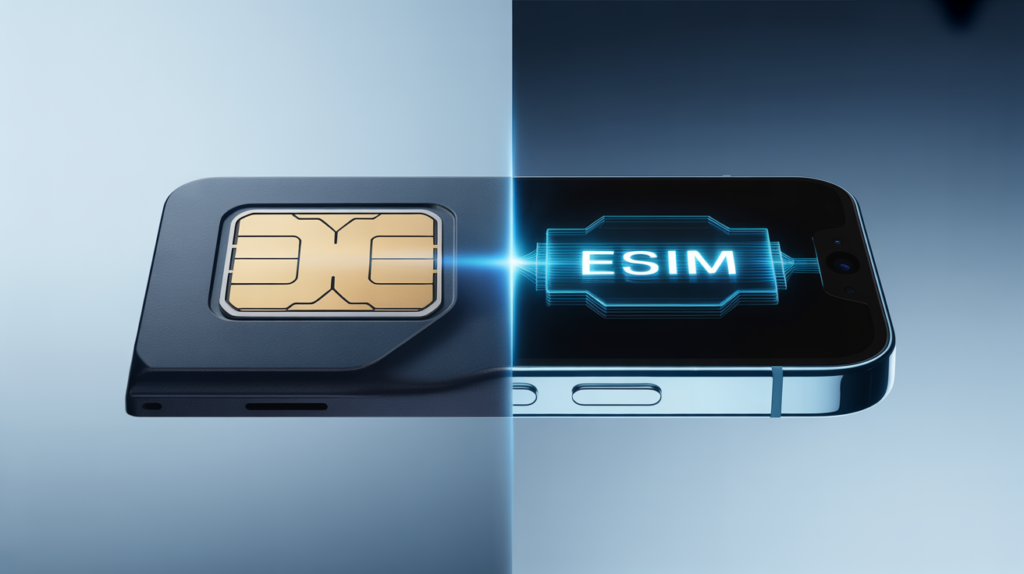
eSIM vs Physical SIM: Which Should You Choose in 2025?
The debate between eSIM and physical SIM cards is heating up as more devices embrace digital connectivity. Whether you’re upgrading your phone, planning international travel, or simply curious about the future of mobile technology, understanding the differences between these two options is essential.
In this comprehensive comparison, we’ll break down everything you need to know to make the right choice for your lifestyle.
Understanding the Basics
Before diving into the comparison, let’s clarify what we’re comparing. If you’re new to eSIM technology, check out our complete beginner’s guide to eSIM for a detailed introduction.
A physical SIM card is the traditional removable chip you’ve been using for decades. It stores your subscriber information and needs to be physically inserted into your device.
An eSIM (embedded SIM) is a programmable chip built directly into your device. It performs the same functions as a physical SIM but can be activated and managed digitally—no physical card required.
Head-to-Head Comparison
Let’s examine how eSIM and physical SIM stack up across the categories that matter most.
Convenience & Setup
Physical SIM:
- Requires visiting a store or waiting for mail delivery
- Need a SIM ejector tool to install
- Simple concept that most people understand
- Can be moved between devices easily
eSIM:
- Instant activation—download a plan in minutes
- No tools or physical handling required
- Setup through device settings or QR code scanning
- Multiple profiles stored on one device
Winner: eSIM — The ability to activate service instantly, even from another country, is a game-changer. According to GSMA Intelligence, eSIM activations are growing 30% year-over-year as users discover this convenience.
Travel & International Use
This is where the comparison gets interesting—and where eSIM truly shines.
Physical SIM:
- Must find a local shop at your destination
- Language barriers when purchasing abroad
- Risk of losing your home SIM while switching
- Limited to one network at a time (unless dual-SIM phone)
eSIM:
- Purchase travel data before your flight lands
- Compare international eSIM providers from home
- Keep your home number active via physical SIM
- Switch between travel plans without removing anything
Winner: eSIM — For travelers, this isn’t even close. The European Consumer Organisation (BEUC) reports that EU travelers can save up to 80% on roaming costs by using local eSIM data plans instead of carrier roaming.
Cost Comparison
Physical SIM:
- Often bundled “free” with phone contracts
- Prepaid options widely available
- Replacement costs if lost or damaged (~$5-25)
- International roaming can be expensive
eSIM:
- No physical production or shipping costs for carriers
- Competitive pricing on data-only travel plans
- Some carriers still charge activation fees
- Prepaid eSIM options increasingly available
Winner: Tie — Domestic pricing is comparable, but eSIM often wins for international data. The real savings come from avoiding carrier roaming fees during travel.
Security & Safety
Physical SIM:
- Can be removed and used in another device
- Vulnerable to SIM swap fraud (criminals convincing carriers to transfer your number)
- Can be lost, stolen, or damaged
- Easy to verify physical possession
eSIM:
- Tied to your specific device
- Harder to execute SIM swap attacks
- Can’t be physically stolen without the device
- Remote deactivation possible if device is lost
Winner: eSIM — The Federal Communications Commission (FCC) has highlighted SIM swap fraud as a growing concern. eSIM’s device-binding provides meaningful protection against this attack vector.
Device Compatibility
Physical SIM:
- Works with virtually all phones
- Universal nano-SIM standard
- No special device requirements
- Backward compatible with older phones
eSIM:
- Requires eSIM-capable device
- All iPhones since XS/XR (2018)
- Most Samsung flagships since S20
- Google Pixel 3 and newer
- Growing mid-range support
Winner: Physical SIM — While eSIM adoption is accelerating, physical SIM still works with more devices globally. However, Apple’s decision to make iPhone 14+ eSIM-only in the US signals where the industry is heading.
Flexibility & Control
Physical SIM:
- Easy to swap between devices
- Simple to give to someone else
- Clear ownership—you hold the card
- Works offline for transferring
eSIM:
- Store 8-10 profiles on most devices
- Quick switching between carriers
- Manage everything from settings app
- Transfer to new device requires carrier support
Winner: Depends — Physical SIM wins for device swapping; eSIM wins for managing multiple lines and carriers on one device.
Real-World Scenarios: Which Should You Choose?
Choose Physical SIM If You:
- Frequently switch phones or share devices
- Live in an area with limited eSIM carrier support
- Prefer tangible control over your service
- Use an older device without eSIM support
- Want maximum flexibility for device resale
Choose eSIM If You:
- Travel internationally regularly
- Want instant connectivity without store visits
- Need multiple phone numbers (work/personal)
- Value enhanced security against SIM fraud
- Use a modern smartphone that supports it
- Prefer eco-friendly digital solutions
The Best of Both Worlds: Use Both!
Here’s what many tech-savvy users don’t realize: you don’t have to choose. Most eSIM-capable phones support both eSIM and physical SIM simultaneously.
The optimal setup for many users:
- Physical SIM: Your primary home carrier for calls and texts
- eSIM: Travel data plans, secondary lines, or backup connectivity
This dual approach gives you maximum flexibility. Keep your existing physical SIM setup while adding eSIM capabilities for specific use cases.
The Future of SIM Technology
The trajectory is clear: eSIM is becoming the standard. Here’s what’s driving the transition:
Industry Momentum:
- Apple removed physical SIM trays from US iPhone 14+ models
- Samsung and Google are expanding eSIM-first options
- Carriers worldwide are investing in eSIM infrastructure
Consumer Benefits:
- Smaller devices without SIM tray cutouts
- Easier device setup and activation
- Better water resistance potential
- Reduced e-waste from plastic SIM cards
Market Predictions:
According to Juniper Research, eSIM-capable devices will exceed 3.5 billion by 2025, with consumer eSIM connections growing 180% over the next five years.
Making Your Decision
| Your Priority | Best Choice |
|---|---|
| Travel frequently | eSIM |
| Maximum device flexibility | Physical SIM |
| Security conscious | eSIM |
| Oldest device compatibility | Physical SIM |
| Multiple phone lines | eSIM |
| Simple, familiar setup | Physical SIM |
| Future-proof choice | eSIM |
Getting Started with eSIM
Ready to try eSIM? The process is simpler than you might think. Most carriers now support eSIM activation, and travel eSIM providers offer affordable international data plans.
For a step-by-step walkthrough of activating your first eSIM, including device-specific instructions for iPhone and Android, read our complete eSIM setup guide.
Conclusion
Both eSIM and physical SIM have their place in 2025. Physical SIMs offer familiarity and universal compatibility, while eSIMs deliver convenience, security, and travel-friendly features that are hard to beat.
For most users with modern smartphones, the answer isn’t either/or—it’s both. Use your physical SIM for your primary line and embrace eSIM for the flexibility it provides.
The future is digital, and eSIM is leading the way. Whether you make the switch now or wait until your next device upgrade, understanding both technologies ensures you’ll make the right choice for your connected life.
Ready to experience eSIM? Browse our destination guides to find the perfect travel eSIM for your next adventure.