
What is an eSIM? The Complete Beginner’s Guide for 2025
Picture this: You’ve just landed in a new country, eager to explore. But instead of hunting for a local SIM card shop or paying outrageous roaming fees, you simply tap a few buttons on your phone—and you’re instantly connected. Welcome to the world of eSIM technology.
If you’ve heard the term “eSIM” but aren’t quite sure what it means or how it could transform your travel experience, you’re in the right place. This comprehensive guide will walk you through everything you need to know about eSIM technology in 2025.
What Exactly is an eSIM?
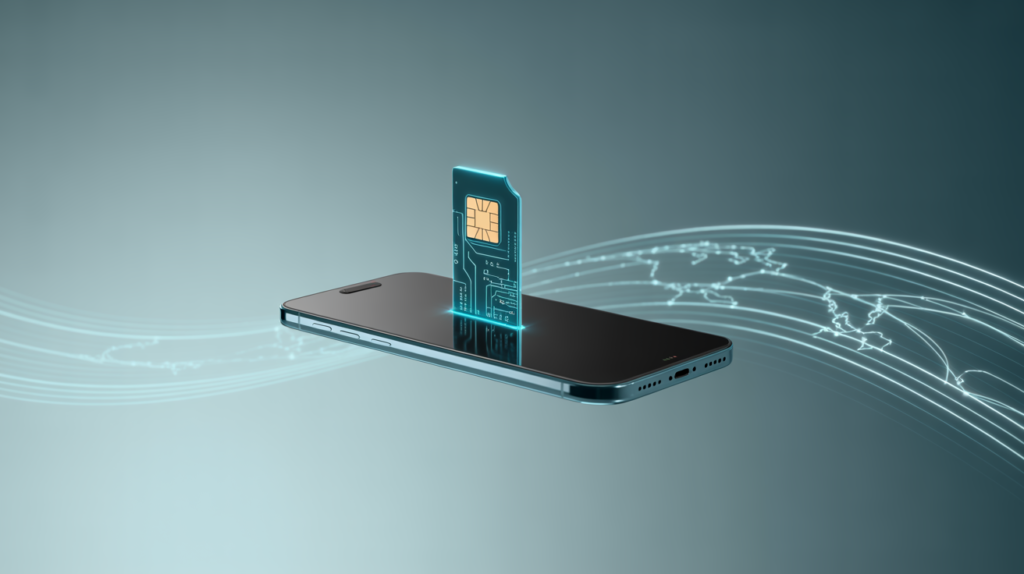
An eSIM (embedded SIM) is a digital SIM card built directly into your device. Unlike traditional physical SIM cards that you insert and remove, an eSIM is a small chip permanently installed in your smartphone, tablet, or smartwatch during manufacturing.
Think of it this way: a traditional SIM card is like a key you carry around, while an eSIM is like a smart lock that can be programmed remotely. The eSIM stores all the same information as a physical SIM—your phone number, carrier details, and network authentication—but it does so digitally.
The technology was standardized by the GSMA (the global mobile industry organization) and has been rapidly adopted by major device manufacturers and mobile carriers worldwide.
How Does eSIM Technology Work?
The magic of eSIM lies in its reprogrammability. Here’s what happens when you activate an eSIM:
- You choose a carrier or data plan – This can be done through your device settings, a carrier app, or by scanning a QR code
- The carrier sends a digital profile – This profile contains all the information needed to connect to their network
- Your eSIM downloads and stores the profile – This happens over WiFi or an existing cellular connection
- You’re connected – Your device can now access the carrier’s network
The entire process typically takes just a few minutes, and you can store multiple eSIM profiles on a single device—though usually only one can be active at a time for data.
Which Devices Support eSIM?
eSIM support has grown dramatically since Apple first introduced it in 2018. Here are the major devices that support eSIM technology in 2025:
Apple Devices
- iPhone XS, XR and all newer models (iPhone 14 and later in the US are eSIM-only)
- iPad Pro (3rd generation and later)
- iPad Air (3rd generation and later)
- iPad (7th generation and later)
- Apple Watch Series 3 and later
Samsung Devices
- Galaxy S20 and all newer S-series phones
- Galaxy Z Fold and Z Flip series
- Galaxy Watch 4 and later
Google Devices
- Pixel 3 and all newer Pixel phones
- Pixel Watch
Other Manufacturers
- Motorola Razr series
- Huawei P40 and newer
- Microsoft Surface Pro (select models)
- Many Windows laptops with cellular connectivity
Pro tip: To check if your specific device supports eSIM, go to Settings > General > About (on iPhone) or Settings > About Phone (on Android) and look for an EID (Embedded Identity Document) number.
eSIM vs Physical SIM: What’s the Difference?
| Feature | Physical SIM | eSIM |
|---|---|---|
| Form factor | Removable card | Built into device |
| Activation | In-store or mail delivery | Instant, digital |
| Switching carriers | Need new physical card | Download new profile |
| Multiple numbers | Need multiple SIM slots | Store multiple profiles |
| Risk of loss/damage | Can be lost or damaged | Permanently embedded |
| International travel | Buy local SIM or pay roaming | Activate travel eSIM instantly |
5 Key Benefits of Using eSIM
1. Instant Activation
No more waiting for a SIM card to arrive in the mail or visiting a store. With eSIM, you can be connected within minutes of purchasing a plan—perfect for last-minute travel or urgent connectivity needs.
2. Travel Freedom
This is where eSIM truly shines. Instead of paying expensive roaming fees or searching for a local SIM shop when you land, you can purchase and activate a local or regional eSIM before you even board your flight. Many eSIM providers offer affordable data plans for virtually every country.
3. Dual SIM Convenience
Most eSIM-capable phones allow you to use your physical SIM and eSIM simultaneously. This means you can keep your home number active while using a local eSIM for data—perfect for receiving important calls while traveling without paying roaming charges.
4. Enhanced Security
Physical SIM cards can be removed and used in other devices, potentially compromising your identity. eSIMs are tied to your specific device, adding an extra layer of security against SIM swap fraud.
5. Environmental Benefits
No plastic cards, no packaging, no shipping—eSIMs are the eco-friendly choice for mobile connectivity.
How to Set Up an eSIM: Step-by-Step Guide
On iPhone:
- Go to Settings > Cellular (or Mobile Data)
- Tap Add eSIM or Add Cellular Plan
- Choose to scan a QR code or use a carrier app
- Follow the on-screen instructions
- Label your new plan (e.g., “Travel Data” or “Work”)
- Choose which line to use for calls, messages, and data
On Android:
- Go to Settings > Network & Internet > SIMs
- Tap Add or the + icon
- Select Download a SIM instead
- Scan the QR code provided by your carrier
- Follow the prompts to complete activation
Important: Make sure you’re connected to WiFi before starting the eSIM activation process, as you’ll need an internet connection to download the carrier profile.
Common eSIM Myths Debunked
Myth 1: “eSIM is only for new, expensive phones”
Reality: Many mid-range devices now support eSIM, and the technology is becoming standard rather than premium.
Myth 2: “You can only have one eSIM”
Reality: Most devices can store 8-10 eSIM profiles, though typically only one or two can be active simultaneously.
Myth 3: “eSIM is complicated to set up”
Reality: Setting up an eSIM is often easier than inserting a physical SIM—no tiny tools or steady hands required!
Myth 4: “eSIM plans are more expensive”
Reality: eSIM plans are often competitively priced, and for travelers, they frequently offer significant savings compared to roaming.
Myth 5: “If my phone breaks, I lose my number”
Reality: eSIM profiles can be transferred to a new device, and your carrier can help restore your service.
Is eSIM Right for You?
eSIM technology is ideal for:
- Frequent travelers who want hassle-free connectivity abroad
- Digital nomads working from different countries
- Business professionals who need separate work and personal lines
- Anyone wanting a backup connectivity option
- Tech enthusiasts who appreciate cutting-edge solutions
You might prefer a physical SIM if:
- You frequently switch phones and want to just move your SIM
- Your device doesn’t support eSIM
- You prefer having a tangible card as backup
The Future of eSIM
The eSIM revolution is just getting started. Industry experts predict that by 2027, eSIM will become the primary SIM technology in smartphones, with physical SIM slots eventually disappearing from most devices.
We’re also seeing eSIM expand beyond phones into laptops, tablets, smartwatches, and even IoT devices. The connected world is becoming more seamless, and eSIM is leading the charge.
Ready to Try eSIM?
Now that you understand what eSIM is and how it works, you’re ready to experience the freedom of digital connectivity. Whether you’re planning your next international adventure or simply want a more flexible mobile setup, eSIM technology offers a smarter, simpler way to stay connected.
The days of fumbling with tiny SIM cards and hunting for local shops are over. Welcome to the future of mobile connectivity—welcome to eSIM.
Have questions about eSIM? Check out our other guides on choosing the best eSIM for your destination, or contact us for personalized recommendations.